
manual transmission fluid change
Manual Transmission Fluid Change: A Comprehensive Guide (Updated 12/17/2025)
Today, December 17th, 2025, we delve into maintaining a crucial, often overlooked aspect of your vehicle: the manual transmission fluid change process.
Despite the decline in manual transmissions, understanding their maintenance remains vital for enthusiasts and owners alike, ensuring smooth shifting and longevity.
This guide provides a detailed, step-by-step approach to performing a manual transmission fluid change, covering everything from fluid types to potential pitfalls.
Manual transmission fluid (MTF) is a specialized lubricant engineered to withstand the extreme pressures and shearing forces within a manual gearbox. Unlike engine oil, MTF primarily focuses on lubricating gears, synchronizers, and bearings, facilitating smooth and efficient power transfer from the engine to the wheels.
Its composition differs significantly from automatic transmission fluid, and using the wrong fluid can lead to severe damage, including gear wear, shifting difficulties, and ultimately, transmission failure. Modern MTFs often incorporate additives to enhance performance, such as friction modifiers for improved synchronizer engagement and extreme pressure additives to protect against heavy loads.
Understanding the role of MTF is the first step towards proper maintenance. While often neglected, regular fluid changes are crucial for extending the life of your manual transmission and maintaining optimal driving experience. Ignoring this maintenance can result in costly repairs down the road, making proactive care a worthwhile investment.
Why Change Your Manual Transmission Fluid?
Over time, manual transmission fluid degrades, losing its lubricating properties and ability to protect vital components. This degradation stems from several factors, including heat, shear stress, and contamination from metal particles generated by gear wear. As the fluid breaks down, it becomes less effective at cushioning gears and synchronizers, leading to increased friction and wear.
Old fluid can also contribute to corrosion within the transmission, further accelerating damage. Regular fluid changes remove these contaminants and replenish the fluid’s protective additives. Ignoring this maintenance can manifest as difficult shifting, grinding noises, and ultimately, costly transmission repairs or replacement.
Proactive fluid changes are a preventative measure, safeguarding your investment and ensuring the continued smooth operation of your manual transmission. Maintaining clean, fresh fluid is a small price to pay for long-term reliability and driving enjoyment.
Understanding Transmission Fluid Types
Selecting the correct transmission fluid is paramount for optimal performance and longevity. Manual transmissions typically utilize gear oil, differing significantly from automatic transmission fluid. Gear oils are categorized by their viscosity and performance level, most commonly designated by GL-4 or GL-5 specifications.
Furthermore, gear oil is available in conventional, synthetic, and semi-synthetic formulations. Conventional oils are mineral-based, offering a cost-effective solution for older vehicles. Synthetic oils provide superior thermal stability, shear resistance, and extended drain intervals, ideal for high-performance applications.
Choosing the wrong fluid can lead to compatibility issues, accelerated wear, and even transmission failure. Always consult your vehicle’s owner’s manual or a trusted mechanic to determine the precise fluid specification recommended for your specific transmission.

GL-4 vs. GL-5 Gear Oil

GL-4 and GL-5 are API service classifications defining gear oil performance characteristics. GL-4 fluids contain fewer additives, specifically limited extreme pressure (EP) additives, making them suitable for transmissions with bronze or brass synchronizers. Using GL-5 in these transmissions can cause corrosion and shifting problems.
GL-5 fluids boast higher EP additives, enhancing their ability to withstand heavy loads and prevent wear in hypoid gears commonly found in differentials. However, these additives can react negatively with the softer metals in older manual transmission synchronizers.
Modern transmissions generally require GL-5, but older vehicles often specify GL-4. Always verify your vehicle’s requirements; using the incorrect specification can lead to costly repairs. Some fluids are now formulated as GL-4/GL-5 compatible, offering a versatile solution.
Synthetic vs. Conventional Gear Oil
Conventional gear oil, derived from crude oil, offers a cost-effective solution for maintaining manual transmissions. However, it’s prone to viscosity breakdown under high temperatures and stress, requiring more frequent changes. It may also contain impurities affecting performance over time.
Synthetic gear oil, engineered in a lab, provides superior thermal stability, resisting breakdown and maintaining viscosity across a wider temperature range. This translates to better lubrication, reduced friction, and improved shifting, especially in demanding conditions.
Synthetics generally offer longer service intervals and enhanced protection against wear. While more expensive upfront, the extended life and performance benefits often justify the cost. Consider your driving style and vehicle needs when choosing; synthetics are ideal for performance vehicles or those subjected to heavy use.

Tools and Materials Needed
Essential tools for a manual transmission fluid change include a wrench or socket set matching your drain and fill plug sizes, a fluid pump (for easier filling), a drain pan to catch the old fluid, and torque wrench for proper plug tightening.
Necessary materials encompass the correct type and quantity of manual transmission fluid (refer to your vehicle’s manual), replacement drain and fill plug washers (often crush washers), gloves to protect your hands, and cleaning supplies like rags or brake cleaner.
Optional, but helpful items are a funnel, jack and jack stands for vehicle access, and a magnetic pickup tool if plugs are hard to reach. Safety glasses are crucial to protect your eyes from splashing fluids. Having these items prepared beforehand streamlines the process.
Safety Precautions
Prioritize safety when performing a manual transmission fluid change. Always work in a well-ventilated area, as transmission fluid can release fumes. Wear safety glasses to protect your eyes from splashes, and gloves to prevent skin contact with the fluid, which can be irritating.
Never work under a vehicle supported only by a jack; always use properly rated jack stands. Ensure the vehicle is parked on a level surface and the parking brake is engaged. Hot exhaust components are nearby, so allow sufficient cooling time before starting.
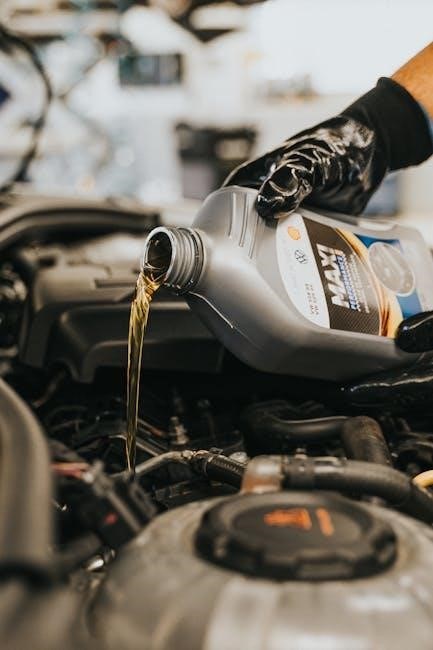
Dispose of used transmission fluid responsibly at a designated recycling center – it’s harmful to the environment. Be mindful of potential slipping hazards from spilled fluid and clean up any spills immediately.
Locating the Drain and Fill Plugs

Identifying the drain and fill plugs is crucial before starting. These are typically located on the side of the transmission case. The drain plug is usually at the lowest point, allowing complete fluid evacuation. The fill plug is generally positioned higher up on the transmission.

Consult your vehicle’s repair manual for the exact location, as it varies significantly between makes and models. Often, they are large hex or square-shaped plugs. Be prepared for them to be tight, potentially requiring penetrating oil.
Carefully differentiate between the drain and fill plugs; attempting to drain fluid without first loosening the fill plug can create a vacuum, making draining impossible.

Preparing the Vehicle
Proper preparation is key for a smooth and safe manual transmission fluid change. Begin by ensuring the vehicle is parked on a level surface and the parking brake is firmly engaged. For easier access, lift the vehicle using a jack and securely support it with jack stands – never work under a vehicle supported only by a jack.
Allow the engine and transmission to warm up slightly. Warm fluid flows more easily, but avoid extreme heat. Position a drain pan beneath the drain plug location. Gather all necessary tools and materials beforehand to streamline the process.
Wear appropriate safety gear, including gloves and eye protection. Confirm you have the correct replacement fluid readily available.
Draining the Old Transmission Fluid
With the vehicle securely supported and the drain pan positioned, carefully loosen the drain plug using the appropriate wrench. Be prepared for fluid to flow once the plug is fully removed – it may be warm! Allow the transmission fluid to drain completely, which can take 20-30 minutes.
To expedite the process, you can gently rock the vehicle back and forth. Ensure the drain pan has sufficient capacity to hold all the old fluid. Avoid spilling fluid onto surrounding components.

Once the fluid has stopped dripping, carefully inspect the drain plug for any metal shavings or debris, indicating potential transmission wear.
Inspecting the Drain Plug
A thorough inspection of the drain plug is crucial for assessing the internal health of your manual transmission. Carefully examine the plug for any metal shavings, which are a strong indicator of gear wear or damage within the transmission. Small amounts of gray paste are normal, representing friction material.
Larger metallic flakes or chunks signify a more serious issue requiring professional attention. Also, check the drain plug’s sealing washer for damage or deterioration; replace it if necessary to ensure a leak-proof seal upon reinstallation.
Pay close attention to the quantity and type of debris present, as this information can help diagnose potential transmission problems before they escalate.
Magnetic Drain Plug Inspection
If your transmission drain plug is magnetic, its inspection is even more critical. The magnet attracts tiny metallic particles produced during normal gear operation. A thin coating of fine, gray metallic paste is typical and indicates expected wear.
However, the presence of larger metal flakes, shards, or an excessive amount of metallic buildup signals potential internal damage. Carefully clean the plug, noting the quantity and size of the debris. Significant findings warrant a professional transmission inspection to assess the extent of the wear and prevent further damage.
Remember, a magnetic plug is designed to capture these particles, protecting your gears, so its condition is a vital diagnostic tool.
Reinstalling the Drain Plug
With the drain area clean, carefully reinstall the drain plug. Ensure you’re using a new crush washer if applicable; these are often single-use items designed to create a proper seal. Hand-tighten the plug first to avoid cross-threading, then use a torque wrench to tighten it to the manufacturer’s specified torque.
Over-tightening can strip the threads in the transmission case, leading to costly repairs. Consult your vehicle’s repair manual for the correct torque specification. Under-tightening risks leaks, so precision is key. Double-check the tightness after a short period to ensure it hasn’t loosened during initial fluid fill.
Adding New Transmission Fluid
With the drain plug securely in place, it’s time to introduce the new transmission fluid. Using a fluid pump or a squeeze bottle with a flexible hose, carefully insert the fill nozzle into the fill plug opening. Slowly begin adding the fluid, referencing your vehicle’s specifications for the correct quantity.
Avoid overfilling, as this can cause pressure buildup and leaks. Add fluid in stages, periodically checking the level (discussed in the next section). Ensure you’re using the correct type of fluid – GL-4 or GL-5, synthetic or conventional – as specified by your vehicle’s manufacturer. A mismatched fluid can cause damage to the transmission’s internal components.
Checking the Fluid Level
After adding the initial amount of fluid, verifying the level is crucial. With the engine off, remove the fill plug again and briefly insert a clean finger or a small dipstick (if applicable) into the opening. You’re aiming for the fluid level to be at the bottom of the fill plug hole – it should slightly seep out when at the correct level.
Continue adding fluid in small increments, rechecking the level each time, until it reaches this point. Avoid overfilling! Some vehicles have a specific fluid level check procedure outlined in the owner’s manual; always prioritize that guidance. Proper fluid level ensures optimal lubrication and prevents damage to the transmission’s gears and bearings.
Fluid Level Check Methods
Several methods exist for verifying the manual transmission fluid level, varying by vehicle design. The most common involves removing the fill plug and visually inspecting the fluid height within the transmission housing. A slight seepage indicates the correct level, while a full flow suggests overfilling.
Some vehicles utilize a dipstick, similar to checking engine oil, inserted into a designated port. Wipe clean, fully insert, and remove to read the level against marked indicators. For transmissions without a plug or dipstick, a graduated measuring tool may be required through the fill port. Always consult your vehicle’s service manual for the precise procedure, as incorrect methods can lead to inaccurate readings and potential transmission damage.
Post-Change Test Drive
Following the manual transmission fluid change, a thorough test drive is crucial to confirm proper operation and identify any potential issues. Begin with a slow, controlled drive, paying close attention to shift quality – it should be smooth and precise across all gears.
Gradually increase speed and perform various driving maneuvers, including acceleration, deceleration, and cornering. Listen for any unusual noises emanating from the transmission. Check for leaks around the drain and fill plugs after the transmission reaches operating temperature.
Monitor the clutch engagement; it should feel consistent and not slip. If any abnormalities are detected, re-evaluate the fluid level or consult a professional mechanic.
Common Problems During a Fluid Change

Several challenges can arise during a manual transmission fluid change. A frequently encountered issue is stripped drain or fill plugs, often due to excessive force or corrosion. Using the correct size wrench and applying penetrating oil beforehand can mitigate this risk.
Difficulty locating the plugs is another common hurdle, especially on older vehicles where corrosion obscures them. Consulting a vehicle-specific repair manual is highly recommended. Incomplete draining of the old fluid can also occur, particularly in transmissions with complex internal designs.
Overfilling or underfilling the transmission can lead to operational problems. Always adhere to the manufacturer’s specified fluid capacity and utilize the appropriate checking method.
Stripped Drain/Fill Plugs
Stripped drain or fill plugs represent a frustrating, yet common, issue during a manual transmission fluid change. This occurs when the threads within the transmission case, or on the plug itself, are damaged, preventing a secure seal. Excessive force during removal or installation is a primary culprit, as is corrosion binding the plug in place.
Using the incorrect wrench size significantly increases the risk of stripping. A six-point socket is preferable to a twelve-point, offering a more secure grip. If a plug feels stuck, apply penetrating oil and allow it to soak before attempting removal.
Repairing a stripped plug often requires specialized tools like plug extractors, or, in severe cases, professional thread repair services.
Difficulty Locating Plugs
Locating the drain and fill plugs on a manual transmission can prove surprisingly challenging, especially for first-time DIYers. Their positioning varies significantly between vehicle makes and models, often obscured by underbody components like the exhaust system or driveshaft. Lack of clear diagrams in owner’s manuals exacerbates this issue.
Consulting a vehicle-specific repair manual or online resources, such as forums dedicated to your car, is crucial. A thorough visual inspection of the transmission housing is essential; the drain plug is typically at the lowest point, while the fill plug is usually higher up.
Don’t mistake other bolts or sensors for the plugs! Look for plugs that accept a square or Allen key. Patience and a good flashlight are your allies in this search.
Fluid Change Intervals
Determining the optimal fluid change interval for your manual transmission is crucial for maintaining its health and performance. Traditionally, recommendations ranged from 30,000 to 60,000 miles. However, modern synthetic fluids often allow for extended intervals, sometimes reaching 100,000 miles or more.
Driving conditions significantly impact this timeline. Severe duty – frequent towing, aggressive driving, or track use – necessitates more frequent changes, potentially every 30,000 miles. Regular highway driving allows for longer intervals.
Always consult your vehicle’s owner’s manual for the manufacturer’s specific recommendations. If no specific interval is listed, a conservative approach of 60,000 miles with synthetic fluid is advisable. Regular inspection of the fluid’s condition can also help determine when a change is needed.
Vehicle-Specific Considerations
Manual transmission fluid change procedures aren’t universally identical; vehicle-specific nuances are critical. European vehicles, particularly those from BMW and Porsche, often require specific fluid types and capacities differing significantly from domestic or Japanese models.
Some transmissions utilize a fill plug that’s difficult to access, requiring partial disassembly or specialized tools. Older vehicles may have drain plugs that are prone to corrosion, increasing the risk of stripping. Always research your specific vehicle’s requirements before beginning the process.
Certain performance vehicles may benefit from specialized fluids designed for high-stress applications. Consulting vehicle-specific forums and repair manuals can provide invaluable insights into potential challenges and best practices for your particular make and model.
DIY vs. Professional Service
Deciding between a DIY manual transmission fluid change and professional service hinges on your mechanical aptitude and comfort level. A DIY approach saves money, typically ranging from $50 to $150 for fluids and basic tools, but demands time, effort, and a degree of mechanical skill.
Potential risks include stripping drain/fill plugs or using the incorrect fluid, leading to costly repairs. Professional service, while more expensive (typically $150 to $300+), offers expertise, specialized tools, and a guarantee against errors.
If you’re unsure about any step, or lack the necessary tools, a professional is recommended. Consider your vehicle’s complexity; some transmissions are notoriously difficult to service, making professional assistance worthwhile.
Cost of a Manual Transmission Fluid Change
The cost of a manual transmission fluid change varies significantly, depending on whether you tackle it yourself or opt for professional service. DIY costs generally range from $50 to $150, primarily covering the price of the transmission fluid itself (typically $20-$80 per quart, depending on type – conventional or synthetic) and potentially a new drain plug gasket.
Professional service costs are considerably higher, typically falling between $150 and $300+, depending on your vehicle’s make and model, and the labor rates of your local mechanic. Dealerships often charge more than independent shops.
Factors influencing the price include the quantity of fluid required, the type of fluid used, and any additional services performed, such as inspecting seals or addressing minor leaks.
Extending Transmission Life
Regular manual transmission fluid changes are paramount for maximizing the lifespan of your gearbox. Clean fluid minimizes wear and tear on internal components, preventing premature failure of gears, bearings, and synchronizers. Consistent maintenance also helps dissipate heat effectively, a critical factor in preventing fluid breakdown and component damage.
Beyond fluid changes, consider your driving habits. Avoid harsh shifting and “speed shifting,” which place excessive stress on the transmission. Promptly address any leaks or unusual noises, as these can indicate underlying issues that, if left unchecked, will escalate into costly repairs.
Choosing the correct fluid type, as specified by your vehicle manufacturer, is also crucial for optimal performance and longevity.
Troubleshooting After a Fluid Change
Post-fluid change issues can sometimes arise, even with careful execution. Difficulty shifting is a common symptom, potentially indicating incorrect fluid level or an incompatible fluid type. Unusual noises, like whining or grinding, could suggest incomplete fluid fill or pre-existing transmission damage exacerbated by the change.
Check the fluid level again to ensure it’s within the specified range. Verify you used the correct GL-4 or GL-5 gear oil recommended for your vehicle. If problems persist, inspect for leaks around the drain and fill plugs. A thorough inspection by a qualified mechanic is advisable if issues remain unresolved, as internal damage may be present.
Remember, a fluid change can sometimes reveal existing problems.
Resources and Further Reading
For deeper dives into manual transmission maintenance, several online resources prove invaluable. Dedicated automotive forums, like those on Reddit (r/MechanicAdvice) and enthusiast-specific boards, offer real-world experiences and troubleshooting tips from fellow owners. Manufacturer service manuals provide precise specifications and procedures for your specific vehicle model.
Websites like HowStuffWorks and popular automotive channels on YouTube (Engineering Explained, Scotty Kilmer) offer visual guides and explanations of transmission operation. Repair manuals from Haynes or Chilton provide detailed step-by-step instructions. Always cross-reference information from multiple sources to ensure accuracy and safety.
Remember, knowledge is power when tackling DIY automotive repairs!